Stepping onto the volleyball court requires a hairstyle that matches your athleticism, staying securely locked in place through aggressive dives, blocks, and spikes. The ideal court hairstyle prevents loose strands from obstructing your vision while avoiding heavy elastics that slip, loosen, or cause painful scalp tension.
From double Dutch braids and secure bubble ponytails to threaded French twists and ribbon-tied knots, game-day styling combines fierce performance with undeniable style. Here are ten court-tested volleyball hairstyles that stay put through five intense sets, complete with sweat-resistant tips and grip-enhancing accessory advice.
Table of Contents
Why the Right Volleyball Hairstyle Matters for Your Game
- Zero Vision Impairment: Spiking, tracking floater serves, and reading setter hands demand 100% unobstructed peripheral and upward vision. High-grip braiding and slicked-back front sections lock down unruly baby hairs and front bangs so they never blind you during a crucial dig.
- Whiplash & Tangle Prevention: Free-flowing high ponytails whip violently across the face, neck, and shoulders during rapid defensive transitions and generate painful sweat-tangles. Bubble braids and rope twists contain loose tail lengths into aerodynamic, static strands.
- Impact & Floor Resistance: Pancake saves and aggressive dive rolls frequently drag hair across the court surface. Secure, scalp-anchored cornrows and protected bun crowns resist friction and stay tight without snagging or unraveling.
- Balanced Scalp Tension: Relying on a single tight elastic causes excruciating tension headaches and hairline breakage over 5-set matches. Multi-point braided foundations distribute tension evenly across your cranium for pain-free endurance.
- Team Spirit & Confidence: Stepping onto the court with sharp, polished braids, synchronized team ribbons, or colorful extensions delivers psychological focus and united team energy before the opening whistle even blows.
Whether you’re gearing up for grueling tournament weekends, daily high-intensity practice, or championship finals, explore these 10 coach-approved, athlete-tested volleyball hairstyles engineered to conquer every rotation.
1. Sleek Dutch Braid Ponytail
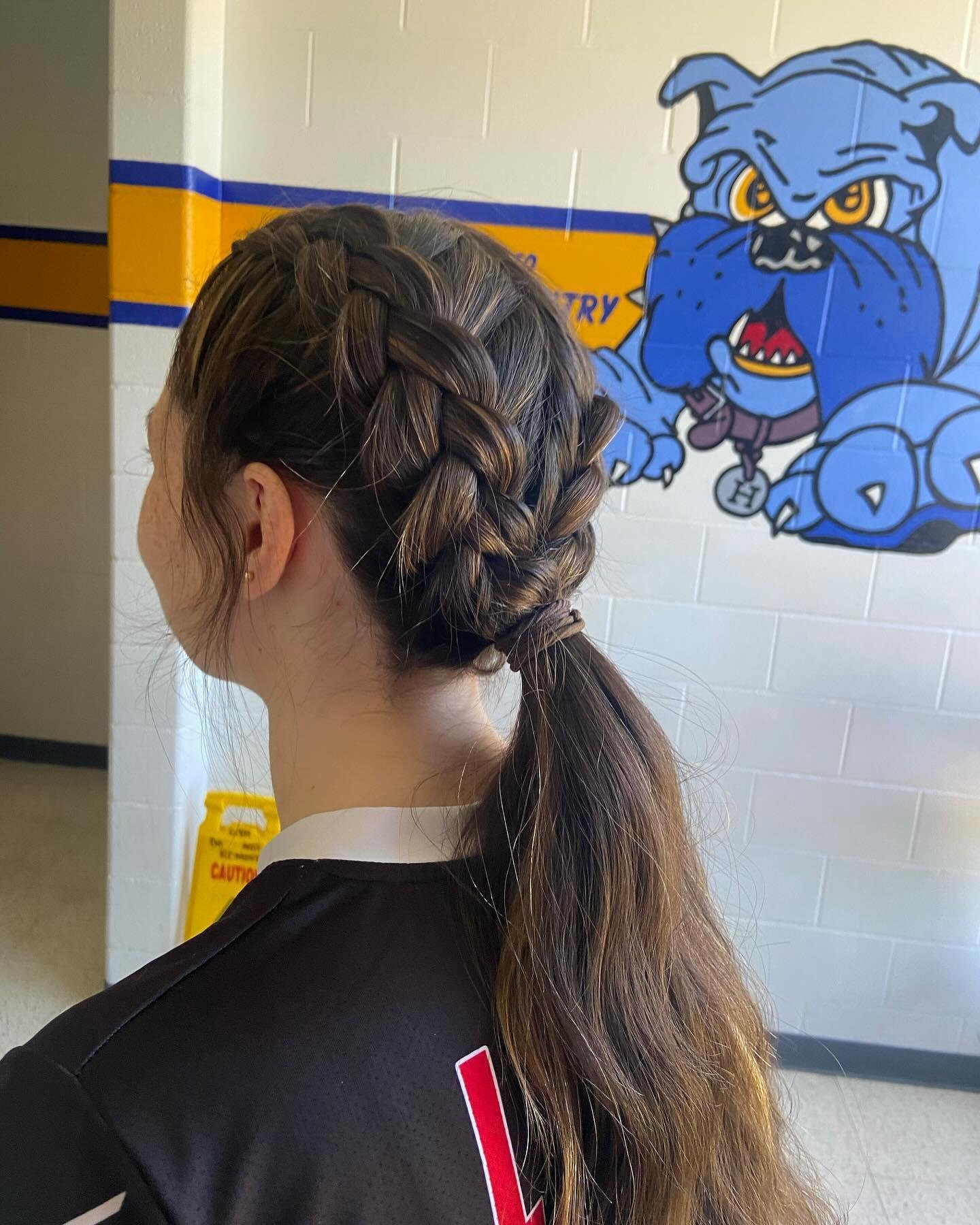 Source: @hairbylola09
This streamlined athletic style features a chunky Dutch braid initiating along one side of the part line, hugging the curve of the scalp, and merging cleanly into a firm low ponytail at the nape of the neck. By anchoring the crown and side strands securely to the cranium, this design eliminates face-framing flyaways while leaving the back of your head flat—making it exceptionally comfortable when diving onto your back or resting on the bench between timeouts.
Best For: Setters and liberos who require maximum overhead vision and freedom of neck movement.
Hair Texture / Type: Fine to medium density; straight, wavy, or chemically relaxed hair.
How to Create: Create a clean side part, then Dutch braid along the temple toward the nape, picking up tensioned sections. Gather remaining lengths into a heavy-duty snagless elastic at the occipital bone.
Court-Ready Tip: Apply a dime-sized amount of sweat-resistant styling gel along the hairline before braiding to prevent side wisps from loosening during sweaty long rallies.
2. Quad Cornrow Bubble Ponytail
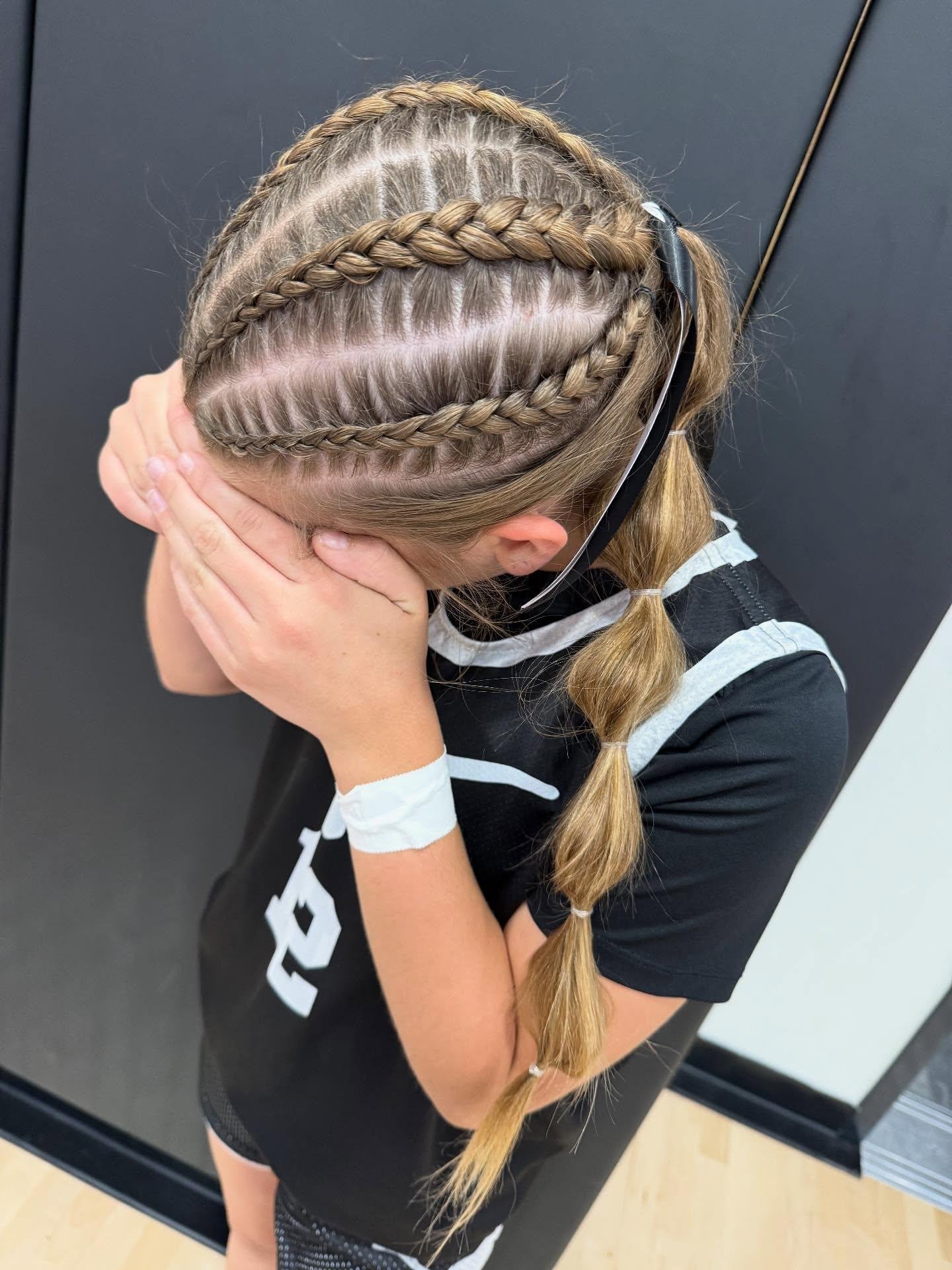 Source: @kacee_leigh_11
Engineered for all-day tournament endurance, this dynamic look begins with four immaculate scalp-gripping cornrows that converge into a high crown ponytail. To celebrate gameday pride, team-colored ribbons are woven around the base elastic, leading down into a segmented bubble braid tail. The repeating elastic bubbles prevent the ponytail from whipping across your shoulders during explosive vertical block jumps.
Best For: Outside hitters, middle blockers, and tournament players facing back-to-back matches.
Hair Texture / Type: Medium to thick density; works seamlessly on natural, wavy, or straight lengths.
How to Create: Divide front hair into four vertical quadrants. Braid each firmly back into a crown ponytail. Fasten with a silicone-coated sports band, tie your team ribbons, and segment the tail every 2 inches with mini clear bands.
Court-Ready Tip: Lightly tease each bubble segment before securing the next elastic to create full, voluminous spheres that hold their structural shape even when soaked with perspiration.
3. Double Dutch Boxer Braids
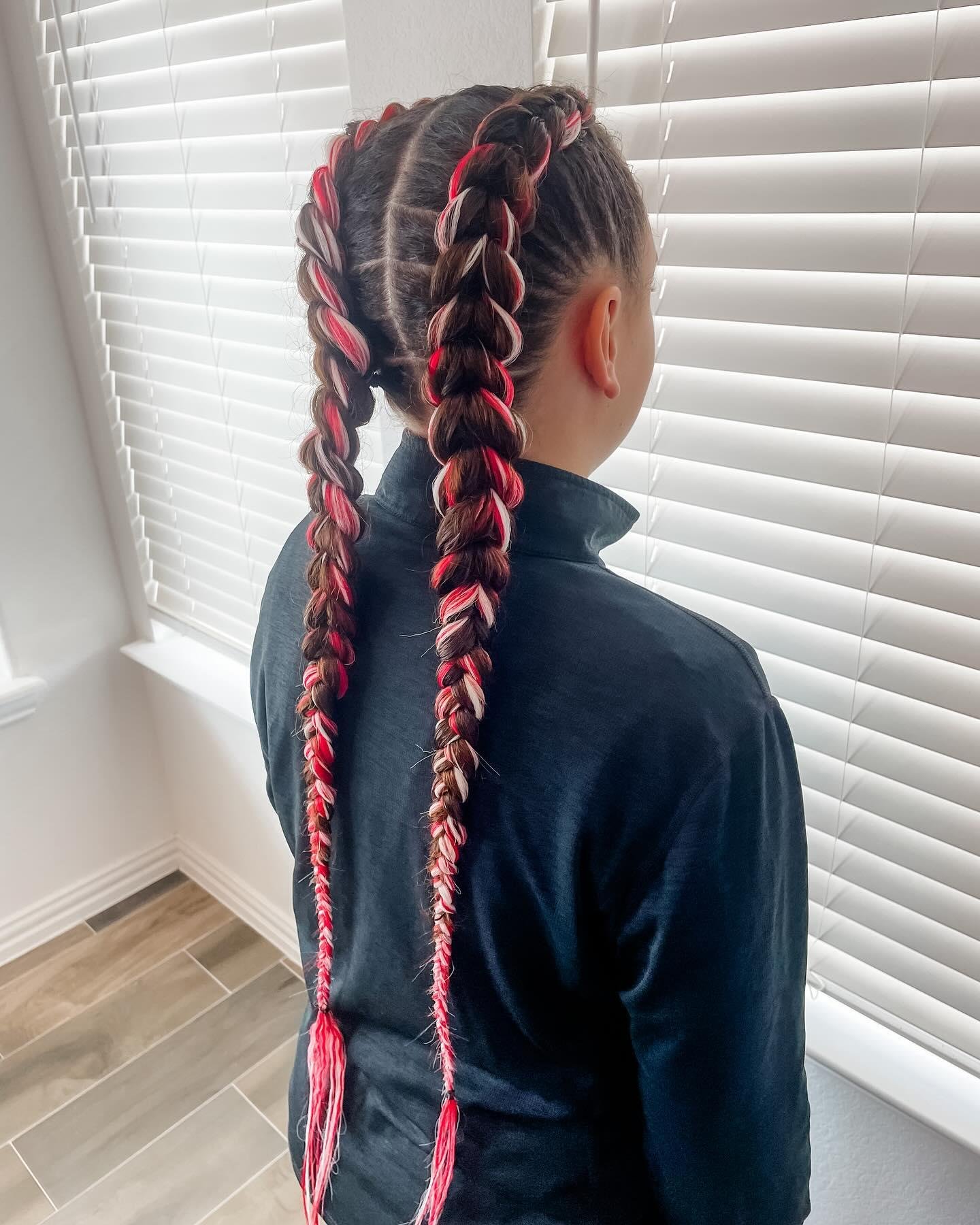 Source: @the_crown_creative
Double Dutch boxer braids remain the undisputed gold standard for contact and court sports. This championship rendition elevates classic pigtail braids by feeding in contrasting team-color extensions (such as bold red and bright white synthetic braiding hair). The reverse underhand Dutch weave keeps the braids elevated off the scalp, while the continuous feed-in delivers ironclad security from forehead to tip without a single stray hair escaping.
Best For: High school, club, and collegiate athletes wanting showstopping school pride and zero maintenance during matches.
Hair Texture / Type: All hair textures; particularly beneficial for layering or adding extra grip to slippery hair.
How to Create: Part hair down the center from brow to nape. Begin a tight Dutch braid on each side, gradually feeding in folded strands of synthetic colored hair at each crossover. Braid tightly to the ends and secure with double bands.
Court-Ready Tip: Dip the synthetic braid ends in warm water (if heat-resistant) or crimp with tiny elastic ties to ensure the braid tail doesn’t unravel after repeated dive landings.
4. Dutch Crown Athletic Bun
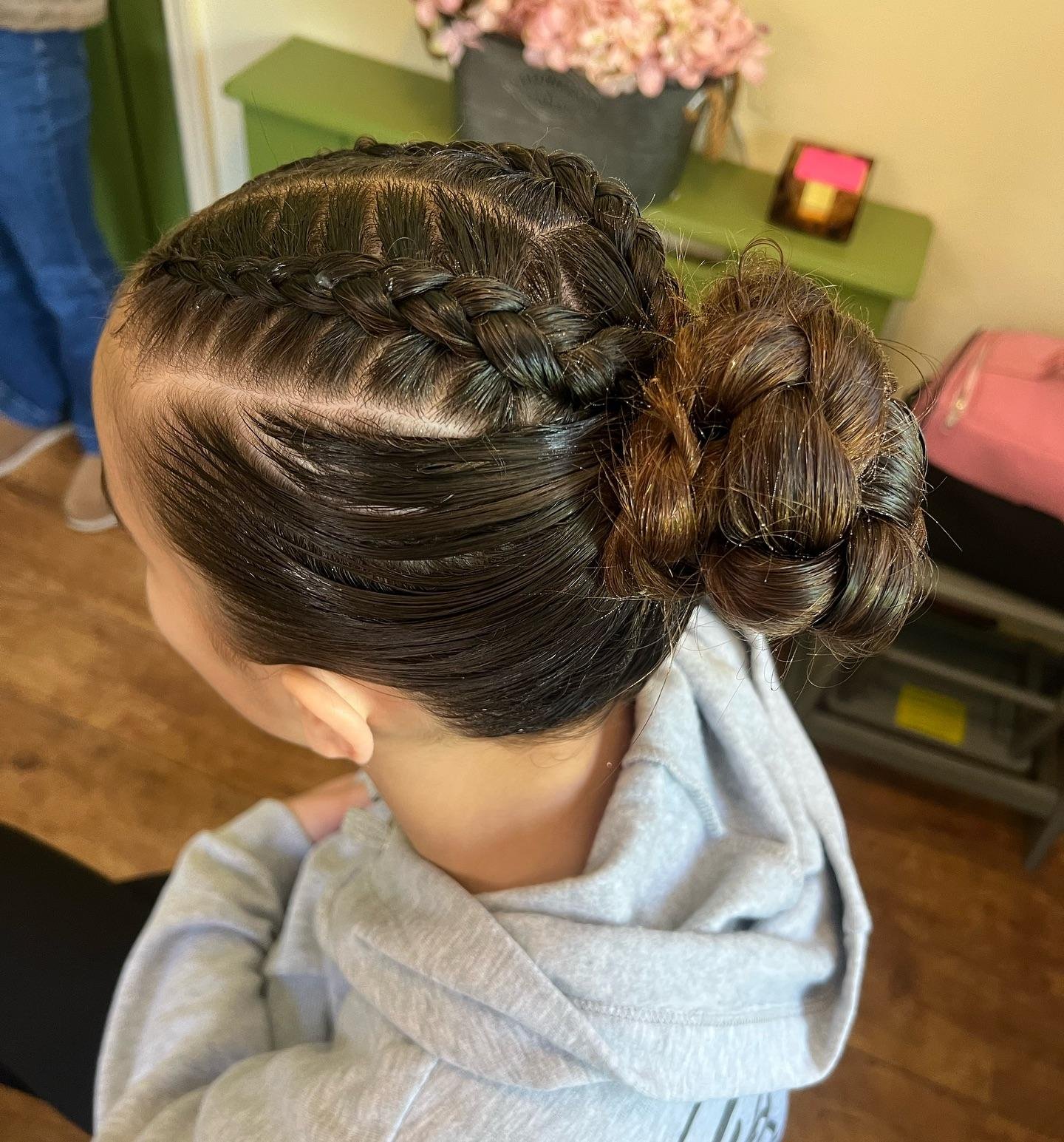 Source: @xlolasx_
When you cannot afford a single strand touching your neck or swinging in your peripheral vision, the braided crown bun is the definitive solution. Starting with symmetrical Dutch braids that wrap cleanly around the crown of the head, the tails are wound into a reinforced low donut bun pinned flush against the base of the skull. This completely enclosed architecture keeps your neck cool and eliminates all swinging tail momentum.
Best For: Intense summer tournaments, hot gyms, beach volleyball, and players with long, heavy hair.
Hair Texture / Type: Medium to thick long hair; wavy, curly, or straight.
How to Create: Braid twin Dutch braids around the occipital contour. Twist the merged tails into a tight spiral bun at the nape and anchor using spiral spin pins (screw pins) rather than flimsy flat bobby pins.
Court-Ready Tip: Avoid traditional open bobby pins that slide out during vigorous court dives; 3 to 4 spiral metal spin pins lock a sports bun in place like a steel vault.
5. Segmented Athletic Bubble Ponytail
 Source: @rileydube28
The bubble ponytail is a favorite across top volleyball programs because it combines effortless speed with unparalleled anti-tangle control. Gathered into a secure mid-crown ponytail with an eye-catching neon tie, the tail is segmented down its entire length by evenly spaced clear elastics. Each section is gently tugged outward into rounded bubbles, dampening tail whip when sprinting into back-row coverage.
Best For: Fast gameday prep when you have less than 5 minutes in the locker room before warmups.
Hair Texture / Type: Shoulder-length to waist-length hair; fine, medium, or coarse.
How to Create: Pull hair smoothly into a sturdy ponytail at the crown. Place miniature elastic bands every 2 to 3 inches down the length. Gently tug the sides of each segment outward to fluff into bubbles.
Court-Ready Tip: Match your primary crown scrunchie or tie to your team jersey accent color (like neon pink or safety orange) for sharp visual pops in match photography.
6. Twin Braided Scrunchie Ponytail
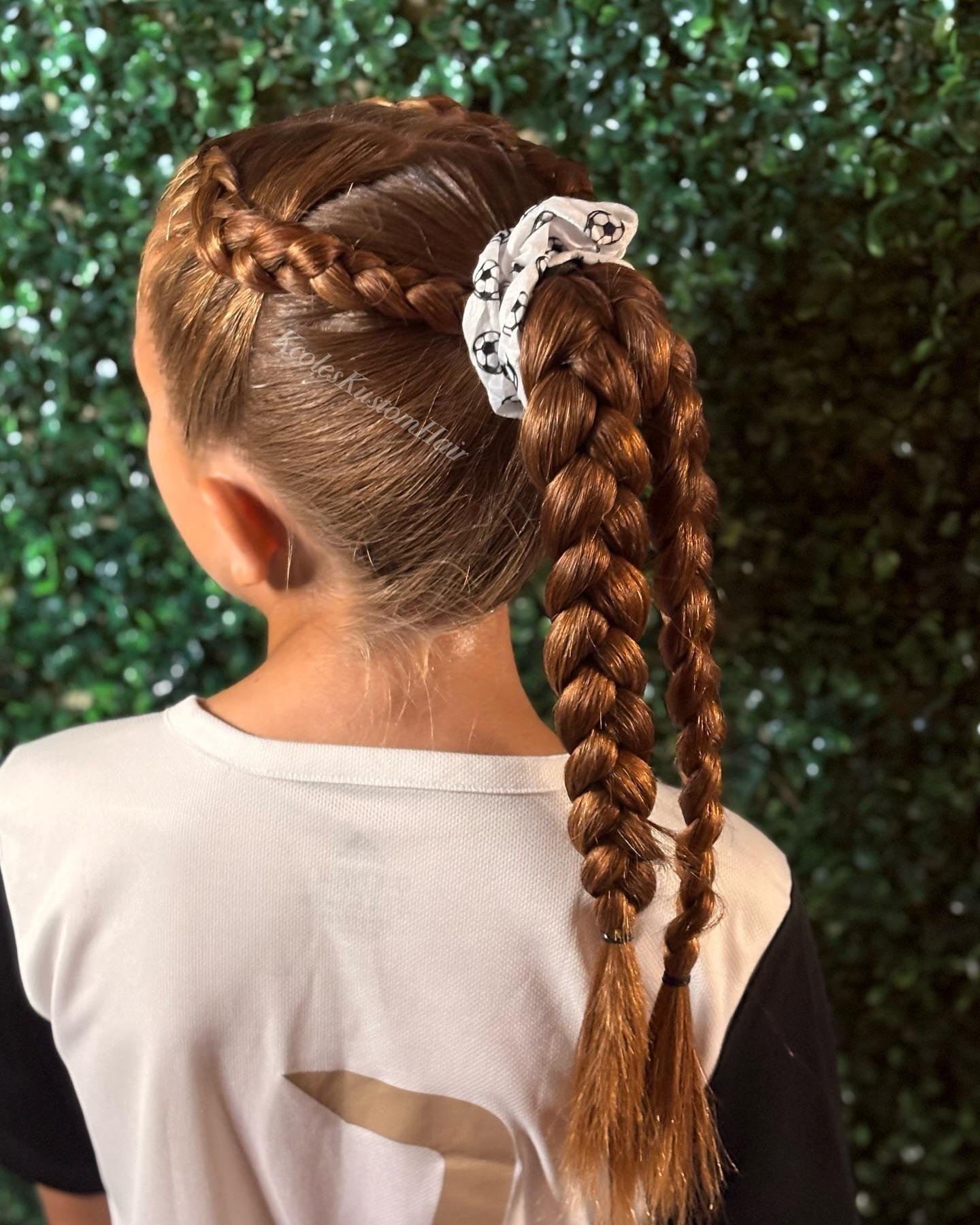 Source: @kcoleskustomhair
This creative, structured style starts with slick Dutch accent braids curving along the temples into a high crown gathering point. Topped with a custom volleyball-print fabric scrunchie over an industrial inner band, the tail splits into two thick three-strand braids that hang symmetrically down the back. Splitting the ponytail weight into twin plaits significantly reduces tension on the scalp while preventing hair from swinging into your eyes.
Best For: Players with dense, heavy hair who suffer from headaches when wearing single high ponytails.
Hair Texture / Type: Thick, coarse, or abundant long hair.
How to Create: Smooth side hair into neat crown braids, merge into a firm high ponytail, and top with a themed volleyball scrunchie. Divide the tail into two equal halves and tightly braid each half to the ends.
Court-Ready Tip: Always place a heavy-duty no-slip rubberized elastic underneath decorative fabric scrunchies; decorative scrunchies alone lack the clamping force needed for competitive play.
7. Multi-Braid Spiral High Ponytail
 Source: @katrinazilberman
Showcased across European professional volleyball leagues, this look utilizes multiple directional scalp braids that feed directly into a buoyant high ponytail. Thin accent micro-braids are then wrapped spirally down the outer length of the gathered ponytail, binding the looser central hair into a cohesive, non-tangling column that moves gracefully with every jump approach.
Best For: Pro athletes, varsity starters, and multi-set tournament matches where style and endurance go hand-in-hand.
Hair Texture / Type: Medium to thick long hair; naturally textured, straight, or blown-out.
How to Create: Section 3 to 4 French or Dutch braids across the crown and temples converging at the apex. Separate two micro strands from the resulting ponytail, braid them firmly, and cross-wrap them diagonally down the ponytail length.
Court-Ready Tip: Mist the completed spiral braid with an anti-humidity sweat shield spray to keep hair cuticle scales closed and frizz-free despite indoor gym heat.
8. Neon Vibrant Bubble Pigtails
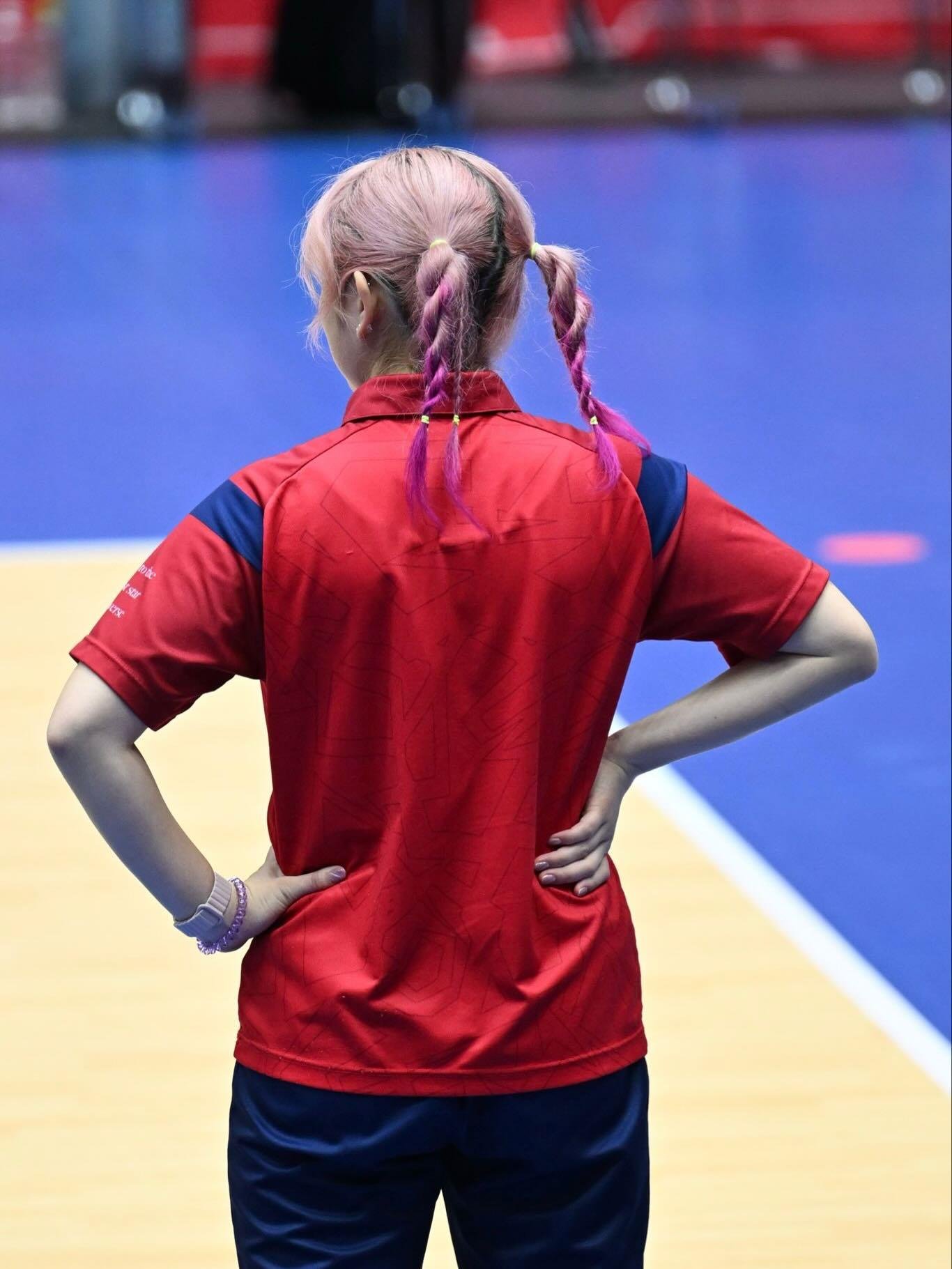 Source: @kanon_ito79
A high-energy, modern favorite among elite international players, this look pairs vibrant colored hair (such as pastel pink or bright highlights) with playful twin bubble pigtails. Fastened high on either side of the head with contrasting neon bands, each pigtail tail is tightly segmented into bubble beads that resist flying forward into your eyes during diving pancake saves and quick sets.
Best For: Libero specialists, defensive defensive dynamos, and players with short-to-medium length hair that won’t reach a single ponytail.
Hair Texture / Type: Short bobs, lob cuts, fine to medium density; colored or highlighted hair.
How to Create: Part hair cleanly down the middle. Secure two high side pigtails just above each ear. Add miniature neon rubber bands at 1.5-inch increments and gently spread each sphere.
Court-Ready Tip: Pigtails allow players with shorter layers to pull all nape strands cleanly upward without needing dozens of loose bobby pins that could fall on the court.
9. Tension-Proof Court Bubble Braid
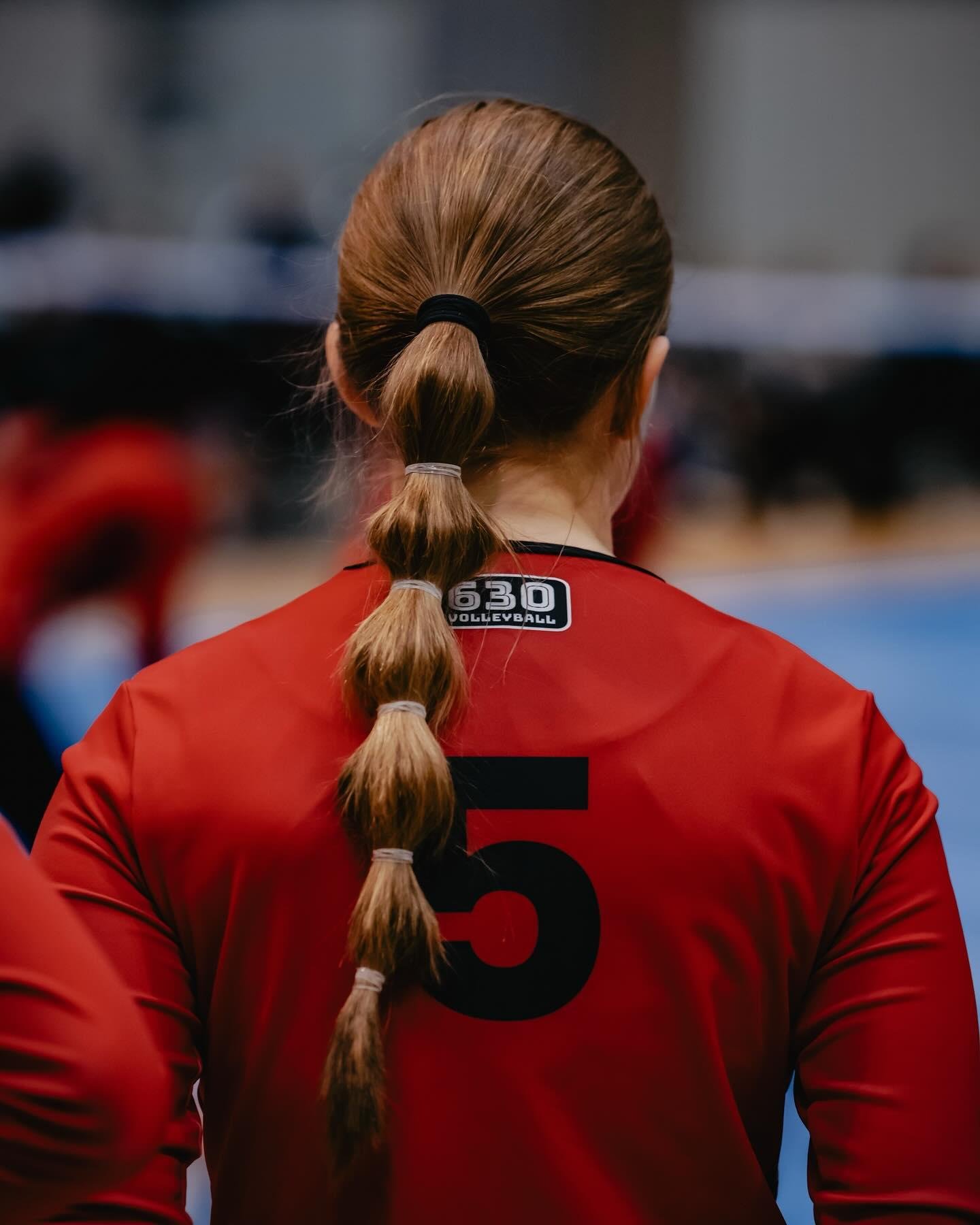 Source: @630volleyball
The pure athletic execution of the court bubble braid: slicked seamlessly back from the forehead with no part, gathered into a rock-solid mid-back ponytail with a wide supportive band, and segmented into 5 to 6 tight, uniform bubble tiers. This clean, no-nonsense silhouette prevents single-point hair fatigue and ensures the ponytail rests flat down the center of your jersey number without swaying.
Best For: Pure athletic minimalism, club tournaments, and team photo day where uniformity looks sharp.
Hair Texture / Type: Medium to thick density; straight, wavy, or brushed-out curls.
How to Create: Brush all hair backward with an edge-control paste to catch temple baby hairs. Anchor firmly at mid-height, then add clear elastic bands down the tail, lightly puffing each tier for balanced symmetry.
Court-Ready Tip: Use polyurethane clear elastic bands rather than everyday rubber bands; they grip hair shafts more firmly under heavy sweat conditions and won’t snap under tension.
10. Scalp Braids Twin Pigtails
 Source: @_hair.by.kaitlyn
Combining the security of cornrows with the charm of classic pigtail braids, this four-track hairstyle divides the crown into four precise parallel rows. Each track is tightly Dutch braided along the curvature of the head before pairing off into two thick, three-strand pigtails at the nape. By distributing root tension across four separate foundation tracks, it eliminates root pulling and guarantees your hair looks as flawless at match point as it did during warmup.
Best For: Long multi-day weekend tournaments, club nationals, and athletes prone to scalp tenderness.
Hair Texture / Type: All hair textures; particularly ideal for thick, coarse, or layered hair.
How to Create: Use a rat-tail comb to section hair into four neat vertical quadrants. Dutch braid each quadrant backward. At the nape, merge the inner and outer braids on each side into two single hanging three-strand plaits.
Court-Ready Tip: Sleep in a silk or satin scarf the night before a weekend tournament; your four-track braids will remain crisp, frizz-free, and ready to play for day two without restyling.
Universal Volleyball Hair Care & Match-Day Prep Guide
Competitive volleyball subjects hair follicles and strands to extraordinary mechanical friction, tight elastic stress, and salty sweat accumulation. Incorporating these court-tested maintenance rules will keep your hair strong, resilient, and breakage-free throughout your season:
- Never Use Plain Rubber Bands: Standard office rubber bands or exposed-metal hair ties slice through hair cuticles under high tension. Always invest in seamless, snag-free nylon hair ties, silk scrunchies for outer decoration, and snagless polyurethane mini-elastics.
- Double-Elastic Strategy: For high ponytails and heavy hair, use two strong elastics stacked directly over each other at the primary base. This doubles clamping power and prevents the dreaded gradual slide that happens during continuous jumping.
- Tame Edges with Alcohol-Free Pomade: Keep baby hairs and temple flyaways locked down using alcohol-free edge control or flexible hair wax sticks. Avoid high-alcohol hairsprays that dry out strands and flake under sweat.
- Rinse Sweat Immediately Post-Match: Salt crystals from dried sweat strip natural moisture from your hair shafts, making them brittle and prone to snapping. Even if you don’t do a full wash, rinse your scalp with cool water and apply a leave-in detangling conditioner after matches.
- Rotate Hairstyle Heights: Avoid wearing a high ponytail at the exact same cranial anchor point day after day. Alternate between high bubble ponytails, low Dutch nape braids, and dual boxer pigtails to give your scalp follicles rest and prevent traction alopecia.
Frequently Asked Questions About Volleyball Hairstyles
How do I prevent my ponytail from sliding down during continuous jumping?
Ponytail slip occurs when hair ties lack sufficient traction against silky or sweat-dampened hair shafts. The best athletic fix is the “two-tier anchor technique”: pull the top half of your hair into a half-up ponytail first, secure it firmly, and then gather the bottom half together with the first ponytail using a second heavy-duty band. You can also spray texturizing powder or dry shampoo at the root anchor point before gathering.
Are bubble braids or traditional Dutch braids better for volleyball?
Both styles excel in competition, but they serve slightly different needs. Dutch boxer braids offer maximum overall security because every single strand from forehead to nape is locked flat to the scalp—making them virtually immune to dive-friction. Bubble braids, on the other hand, are much faster to create (taking under 3 minutes) and are unmatched at preventing long hair tails from whipping and tangling.
What is the best volleyball hairstyle for athletes with short hair or layered bobs?
Players with shorter hair often struggle because lower nape strands fall out of high ponytails. The top solution is twin high or mid pigtails (which require less length to gather) paired with flat snap clips or a non-slip silicone-backed athletic headband. Alternatively, French or Dutch scalp braids running along the crown into mini low buns keep short layers completely contained.
How can I protect my hairline and edges from breakage during intense seasons?
Traction alopecia along the temples is common in competitive volleyball due to overly tight hairstyles. Always avoid pulling hairline strands too tight—braids should feel snug against the skull, never painful or stinging. Use nourishing edge control infused with castor or argan oil, wear satin-lined scrunchies whenever possible, and never rip out mini elastics with force; always snip them cleanly with an elastic-cutter tool.